
Act I
──✦──
In medias res
At 24 I was running my own business: a team of five making roughly $400,000 a year.
Most founders spend years trying to reach that point. I spent months trying to convince myself not to walk away from it.
To understand the decision, you first need to understand my questionable psychology.
It probably starts in childhood. Freud would have a field day with it.
Because my life has been... weird.
And when I say weird, I don’t mean the kind of weird you’d find between aisles 5 and 6 of a discount department store.
I mean the kind of life where, by my early twenties, I’d already been an award-winning jazz musician, a portrait photographer, a bartender on a pirate ship in Malta, an Olympiad physics student, a startup founder, and a university dropout who somehow convinced investors to hand him $1.4 million.
At some point IBM and Harvard gave me a scholarship to study quantum computing, and on random Tuesdays I’d study bioinformatics and genome sequencing algorithms for fun, because apparently my brain doesn’t know how to relax.
I won’t get into all of it here, mostly because I still haven’t figured out how to tell that story coherently, concisely, or without accidentally wandering off into a completely different one.
I actually tried to write part of it down back in 2022. Unfortunately for you, reader, the last four years only made the plot weirder.
The short version is this: in my endless search for creative freedom, I stumbled into entrepreneurship in high school, built my first startup, and from there ambition took over.
I may have read one too many biographies of the billion-dollar founders we all know and love. Or hate, depending on how allergic you are to capitalism. Either way, at some point I basically became a living Silicon Valley caricature.
I wanted to become one of them. The Italian Elon Musk, or at least that’s what I told myself at the time.
But here’s the thing.
It was never really about the money.
Act II
──✦──
Startup porn
I probably peaked at twenty-one, the year I raised $1.4M for Glaut.
It felt like life had cracked open in front of me.
Suddenly, all those impossible founder stories no longer felt impossible. Forbes, Y Combinator, Sequoia. Whatever came next, I could already picture myself there.
Hell, they even brought me back to teach a class at the same university I’d dropped out of months earlier.
And from there, things escalated quickly.
I got invited into rooms I genuinely had no business being in.
Private dinners in skyscrapers with founders whose companies were worth billions.
At one point I spent ten minutes talking with Patrick Collison from Stripe.
I was trying very hard to keep my cool and pretend this was all somehow normal.
And because I was apparently incapable of having a normal human interaction with a billionaire, I asked him what he thought the next big thing in finance would be.
He went quiet for what felt like three minutes, then said: customer support.
This was October 2022, so at the time the answer sounded almost disappointingly boring. Especially since he’d just spent a third of my ten minutes staring into the distance.
Then ChatGPT came out a couple months later and I realized the guy probably knew something the rest of us didn’t.
That was the strange thing about those circles.
Everyone seemed to exist slightly ahead of reality.
Financially, I was so far behind that even the janitor was probably a millionaire.
I saw private jets parked like taxis, artwork hidden in vaults for tax deductions, and food so absurdly good it tasted more real than life itself.
Pride consumed me completely.
I genuinely thought I had made it.
And I didn’t want it to stop for a single second.
Then came my own Paradise Lost, except the apple was equity and everyone had a lawyer.
Act III
──✦──
The bad crop
From the outside, Glaut was doing well.
That was almost the cruelest part.
It would have been easier if everything had clearly fallen apart. If the product had stopped working, if the market had rejected us, if the story had collapsed in some clean, obvious way.
But it didn’t.
The company was thriving.
It was the founding team that started to fracture.
We disagreed on product, on hiring, on legal. And slowly every conversation stopped being about the company and started being about the kind of people we thought we were.
Eventually, it became clear there was no place left for me in the company I had helped bring to life.
And then, almost comically, the erasure became literal.
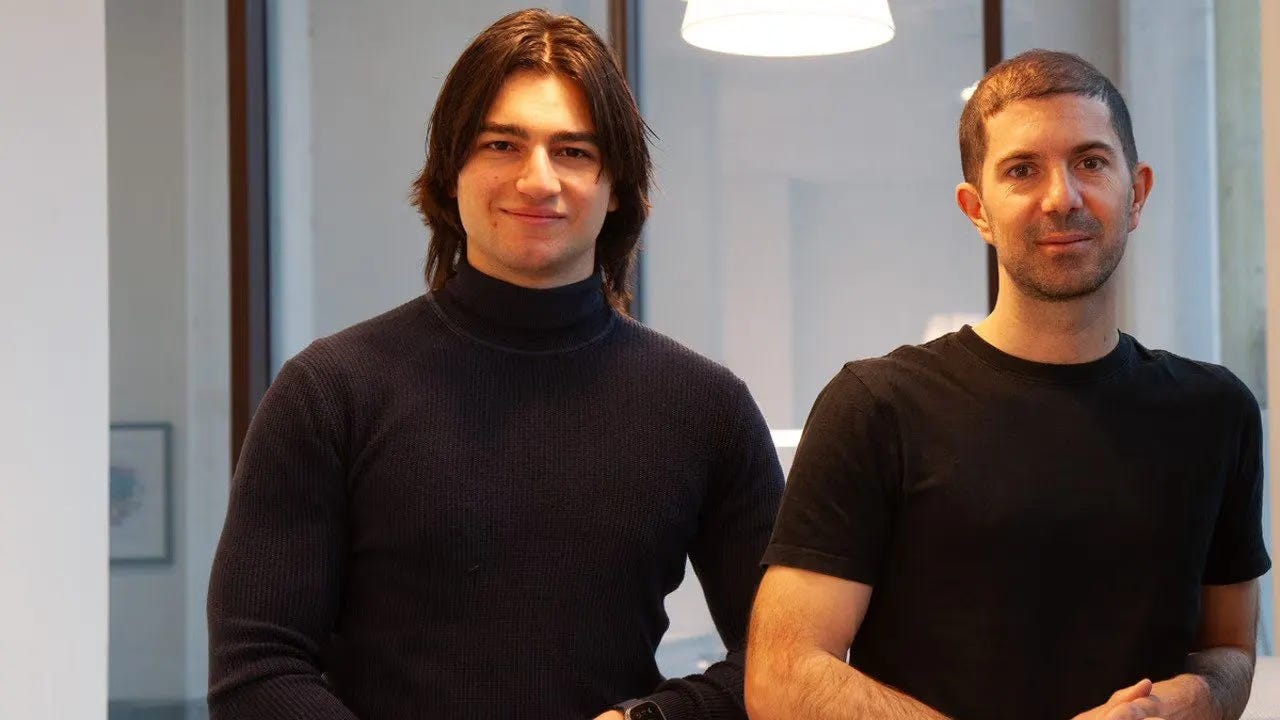
Right before everything exploded, I had shot the team photos for the press release myself.
Photographer brain never dies, apparently.
By the time the article went live, I was already being pushed out, so they cropped me out of the official photo too.
And just like that, where I used to be, there was nothing.
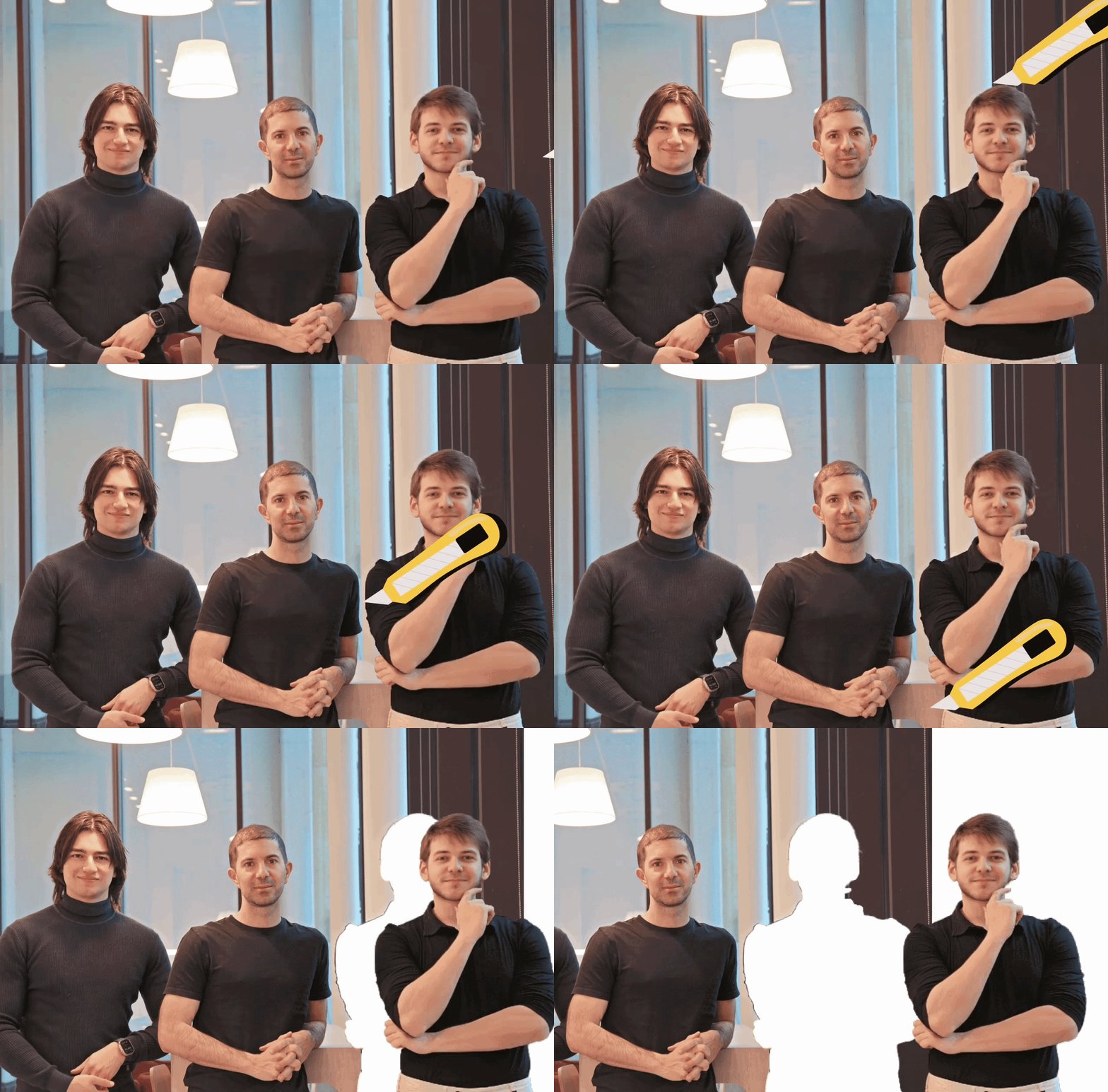
The crop was so bad that it became LinkedIn comedy material for the Italian startup ecosystem for a while.
A bootleg startup version of The Picture of Dorian Gray, except the portrait didn’t reveal the corruption of my soul.
It revealed their disappointing Canva skills.
And the humiliating fact that my entire identity could be removed with one bad crop.
I had spent every waking second on that company. Thinking about it, building it, defending it, obsessing over it.
There was almost nothing of me outside that frame.
Without it, the future just felt blank.
Maybe I would go back to university.
Maybe get a normal job.
Maybe move back in with my parents.
Money was running low too. For a while, I had technically been a paper millionaire. Then I learned how cruel the word technically can be.
Most of it vanished before it ever became real.
Paper millionaire, cash poor.
But losing the company wasn’t even the part that hurt the most.
It was losing my best friend.
Giovanni.
Act IV
──✦──
Dreams into paperwork
For two years, Giovanni and I lived inside the same little universe.
Same apartment. Same office. Same gym. Same impossible dream.
Same arguments at 2am about product, money, strategy, life, meaning, and whatever else two half-insane young founders convince themselves matters while trying to bend reality before rent is due.
We spent so much time together people genuinely thought we were secretly dating.
And in some weird founder way, maybe we were.
Not romantically, obviously, but existentially. Our futures had become so intertwined that normal friendship stopped feeling like the right word for it.
At first, that kind of closeness feels like magic.
Then slowly, almost invisibly, it starts turning into something else.
You hear every story twice. Then ten times. Then a hundred. Every joke has already been made. Every opinion has already been litigated. Personal life disappears. Mystery dies. Familiarity stops feeling warm and starts feeling like a sink full of dirty plates nobody wants to wash.
Still, I thought the bond underneath all of that was real.
We had seen each other at our most delusional, exhausted, pathetic, and alive.
We had built something from nothing.
For a while, against all odds, the world seemed to believe us.
And then, when everything collapsed, he chose the other side.
Not mine.
Maybe that’s the childish version of the story.
But that was the first time I understood what happens when a dream turns into paperwork.
All the years, the nights, the debt, the hunger, the shared insanity. None of it shows up in the contracts.
Those pages only see shares, signatures, risk, and control.
Sometimes the rational move is also the cruel one. Legally correct, strategically smart, and still disgusting.
And in the end, the cap table won.
Even against everything that couldn’t be priced, signed, protected, diluted, or sold.
Including friendship.
Act V
──✦──
Billable trauma
A few months earlier I thought I was on my way to becoming the Italian Elon Musk.
Now I was twenty-one, standing in the smoking ruins of my own ambition.
Which left me with a question straight out of the gates of Hades. The kind you don’t want to answer, because you’re afraid of what the answer might be.
What now?
I had three options, and I hated all of them.
I could finish university and finally make my mom proud. I could get a normal nine-to-five at another startup. Or I could try to monetize the only thing I had left: the skills and the network I’d built at Glaut.
The third option was objectively the worst idea. So naturally, I chose it.
Partly because my ego was still far too unemployed to accept having a boss.
Partly because going back to normal life after everything I had lived through felt like waking up from a dream I was not ready to leave.
And partly because, at that point, I didn’t believe something was meaningful unless it was painful.
So I did what I always did when I didn’t know what to do: I turned the pain into work.
The agency wasn’t a dream. It was a scar with a revenue model.
At Glaut, I had been leading growth, and somehow I’d figured out how to consistently book 40 sales calls a month with no ads, no team, and no real budget.
Just thousands of emails going out every day, automated from a tiny apartment full of sleep-deprived optimism and questionable legal compliance.
I thought maybe I could replicate that system for other startups and help them get clients.
I also had a theory: if I could help companies make money, they would probably find budget for me.
The thing became profitable almost immediately.
Which, given the emotional state I was in, felt less like a victory and more like a design flaw in capitalism.
Because I already had the right relationships inside the Italian startup ecosystem, growth came surprisingly fast.
I’d call an investor on Monday and by Wednesday I’d have three sales calls lined up with top-tier startups from their portfolio.
Over time, the agency grew.
I went through a couple of co-founders along the way. But those are stories for another day, and a softer couch.
And eventually, that little post-traumatic survival experiment became the same $400k-a-year agency I opened this whole thing trying to explain.
Interlude
──✦──
A hole in the paper sky
But let’s step back for a second.
I’m not sure if you’ve realized it by now, but this essay has clearly stopped being only about why I shut down my agency.
Somewhere along the way, it became a biography with a small agency-shaped excuse attached to it.
I hooked you.
And unfortunately, I hooked myself too.
What started as an attempt to answer one clean business question became an excuse to keep writing. To remember stupid things that happened along the way. To excavate feelings I had conveniently buried under work.
And maybe to understand why the hell I keep burning down lives that were starting to look stable, functional, and almost socially acceptable.
Which is annoying, because I did not emotionally consent to writing a biography when I opened the blank page.
But here we are.
The actual answer to why I shut down the agency is at the end of this essay.
It is exactly 62 characters long.
Everything else is the scenic route.
And I have always had a weakness for the scenic route.
You think the point is to arrive somewhere, but then the road starts doing its thing.
The detours.
The breakdowns.
The wrong turns.
The ugly towns that somehow become beautiful because the sun was setting.
The single-serving people you meet once, love for three hours, and never see again.
The gas station sandwiches that were technically vegan, if you don’t count the microplastics.
The random parties where strangers offer you beer and a shot at karaoke in an alphabet you can’t read.
And somewhere along the way, you realize the destination was mostly an excuse to start moving.
Maybe this essay is the same.
I started writing because I thought I owed people an explanation. Why let go of profitable clients and loyal employees? Why stop optimizing a machine that was finally working?
But the more I wrote, the less I cared about the clean answer.
You already know it’s 62 characters long.
The hard part is understanding the kind of person who needed to build that machine in the first place. And the kind who eventually needed to leave it behind.
So here is the deal.
There are two roads out of this essay. Maybe three.
The short one: keep reading. A few more minutes and you get the 62-character answer, clean and done.
The long one is everything that made that answer inevitable. The life underneath it, one country at a time. The Scenic Route, the actual one. And it starts in Milano.

And then there is the third road. The one I’m on right now.
Because even if you read every word I write, I’m not sure two people can ever really know each other.
Maybe we are all a bit like flowers. Rooted in place, reaching for each other and never quite getting there.
So flowers do the only thing they can. They throw things into the air. Pollen, scent, color.
We do the same. Words, jokes, love, essays nobody asked for. Small desperate signals, hoping one of them drifts close enough to another soul.
But the wind decides where they land. Not us.
And maybe the reason you’re still here is that you’re holding one of your own.
A story you keep refusing to write, because some part of you knows that once you start, it will outgrow the question you began with.
If that’s it, you don’t need my essay. You need a blank page and the nerve to fill it.
So go. You can always come back later. Or not. The road rarely cares whether you arrive.
I meant to get back to the main story here and finally answer the question.
But my armodafinil-assisted hands seem to have developed a literary agenda of their own.
They are less interested in giving you a clean answer.
They are more interested in finding a version of my life I can actually live with.
Curtain call
──✦──
62 characters
If you came for the clean answer, this is where I stop taking the scenic route.
So I built the agency, and it worked.
For the first time in my life I wasn’t startup rich. I was liquid.
Money in my account every month. No board, no fundraising, no pretending a spreadsheet was the same thing as cash.
And because I kept moving, a new country every month, I got something I’d never had before.
Freedom. The real kind. The kind that lets you notice you might enjoy your life more than your work.
Then the noticing wouldn’t stop.
Travel had quietly taught me a few things I couldn’t unlearn.
That I had been living for the weekends, doing things I hated five days out of seven to afford the two where I felt alive.
That I was wrecking my body, my mind, and every relationship I had, to earn money I didn’t actually need.
That on a beach in Thailand or a $1,000 month in Vietnam, I felt richer than I ever had with a cap table.
That I would probably never love business itself, only the freedom it bought, and the two are not the same thing.
That nobody was watching my life as closely as I feared, which is terrifying for a day and then the most freeing thing in the world.
And that staying loyal to a promise my younger self made was just a polite way of betraying who I’d become.
None of my best memories had anything to do with work. They were all from the time off.
So I figured: why keep living for the weekends? Why not build a life where feeling alive is the job, not the reward for surviving it?
Why spend years mastering every secret of cold email deliverability, when I could just sit silently and watch a sunset?
The agency itself had never been the dream.
It was a profitable response to a trauma. Something I thought I’d do for a few years before moving on to something more interesting.
There was no vision except me with more money than before.
It didn’t fail. I wasn’t broke. There was no disaster.
It was working correctly the day I shut it down.
It had just become a life I no longer wanted to repeat.
And that turned out to be reason enough.
So, finally. Why did I close the agency?
Because it was boring, and your only chance at life shouldn’t.
That’s the answer. 62 characters.
If you want the rest — every country, every crisis, every version of me that had to happen first — that’s The Scenic Route. And it starts with Milano.