
This is episode #1 of The Scenic Route, the long way around my life.
If you are joining somewhere in the middle, the full route is collected here.
If you want to understand why I started writing all this in the first place, read Cropped Out.
Part I
──✦ ──
The phone call
Before the agency became an agency, there was a phone call.
Let me explain.
I was forced to resign from Glaut on March 22, 2024, two days before my birthday.
Which was thoughtful of my former teammates, in the sense that they gave my existential collapse a clean calendar date I would never forget.
A few weeks later, I was still in Milan, screaming into a pillow and calling friends because I had no idea what to do next.
Some people get a mentor.
Some people get therapy.
I got Dylan.
Which requires a small detour, because Dylan was not exactly a random friend.
I had met Dylan years earlier through Aurora, a fellowship built for the kind of young people whose ambition, ego, and unresolved childhood material make them apply to something called a fellowship in the first place.
Inside Aurora, there was a €10,000 prize if you completed three challenges.
The first one was to write your own biography and get people to comment on it, which, considering what you are reading right now, may have been my villain origin story.
The second one was stranger.
They gave you a list of ten random people, and your job was to reach out, book calls with them, and somehow convince them to fill out a form certifying that you were a young talent.
Which is an insane thing to ask a teenager to do.
But also, apparently, an excellent way to manufacture a future cold email consultant.
I remember writing to PhDs, billionaires, IP lawyers, Nobel Prize physicists, mechanic shop owners, retired investors, and a suspicious number of people whose LinkedIn profiles looked like a government experiment, somewhere in the extended MK Ultra cinematic universe.
Obviously, as a teenager, I had absolutely nothing to offer most of these people except curiosity, audacity, and a subject line good enough to make them question their afternoon plans.
So my strategy was basically deep research, one weirdly specific question, and, when necessary, begging.
Which, in retrospect, might explain why a few years later I became disturbingly good at cold email.
My last certification came from one of the strangest people I’ve ever met.
Imagine an Italian Nikola Tesla, if Tesla had lived long enough to apply for EU grants and build giant wind farms in the sky.
He had apparently raised tens of millions of euros to build the next generation of energy infrastructure using kites flying 13,000 meters in the air to harvest tropospheric wind.
He claimed it could generate energy more efficiently than nuclear power, without the same toxic byproducts.
He also did not believe in global warming, lived in complete paranoia, and personally told me that Bill Gates had hired spies to follow his every move and sabotage his company.
Very normal networking experience.
After all that effort, I expected the third challenge to be some impossible intellectual trial.
Instead, it was a Google Meet interview.
Extremely anticlimactic.
Anyway, both Dylan and I passed everything, only to discover that the €10,000 prize had been removed a few weeks before we finished.
United by disappointment, mild betrayal, and the very specific humiliation of having competed for money that no longer existed, we became friends.
Over the years, our digital footprints kept crossing paths online, which is a very modern way of saying we stayed in touch.
We even met again a year later, both stuck inside a startup accelerator in Milan.
One of those accelerators so bad you don’t even put it on your LinkedIn profile.
At the time, Giovanni and I were building something called Livesey, which would later become the first of six pivots before Glaut finally became Glaut: an attempt to make GPT read a company’s internal documents through a vector database we had built from scratch.
Dylan was orbiting the chaos from the marketing side, helping us make each new version of the idea look slightly less doomed than the previous one.
In 2023, this was the bleeding edge.
Now it’s called RAG, and you can basically drag and drop a PDF into ChatGPT while eating a sandwich.
Time is cruel.
Still, the best memory I have from that period is not the company we were building, or the technology, or whatever delusional pitch deck we were using to convince ourselves this thing mattered.
It is Dylan coming over for the weekend and teaching Giovanni and me how to make tiramisù.
Because Dylan, being a distinguished gentleman from Treviso, apparently considered it his civic duty to educate two spiritually malnourished startup founders on mascarpone, coffee, and the structural integrity of ladyfingers.
There are people you remember for their strategic insight.
There are people you remember for their emotional presence.
And then there are people you remember because, at some point in your life, they stood in your kitchen and explained tiramisù with the seriousness of a constitutional lawyer.
Dylan belonged somewhere between all three.
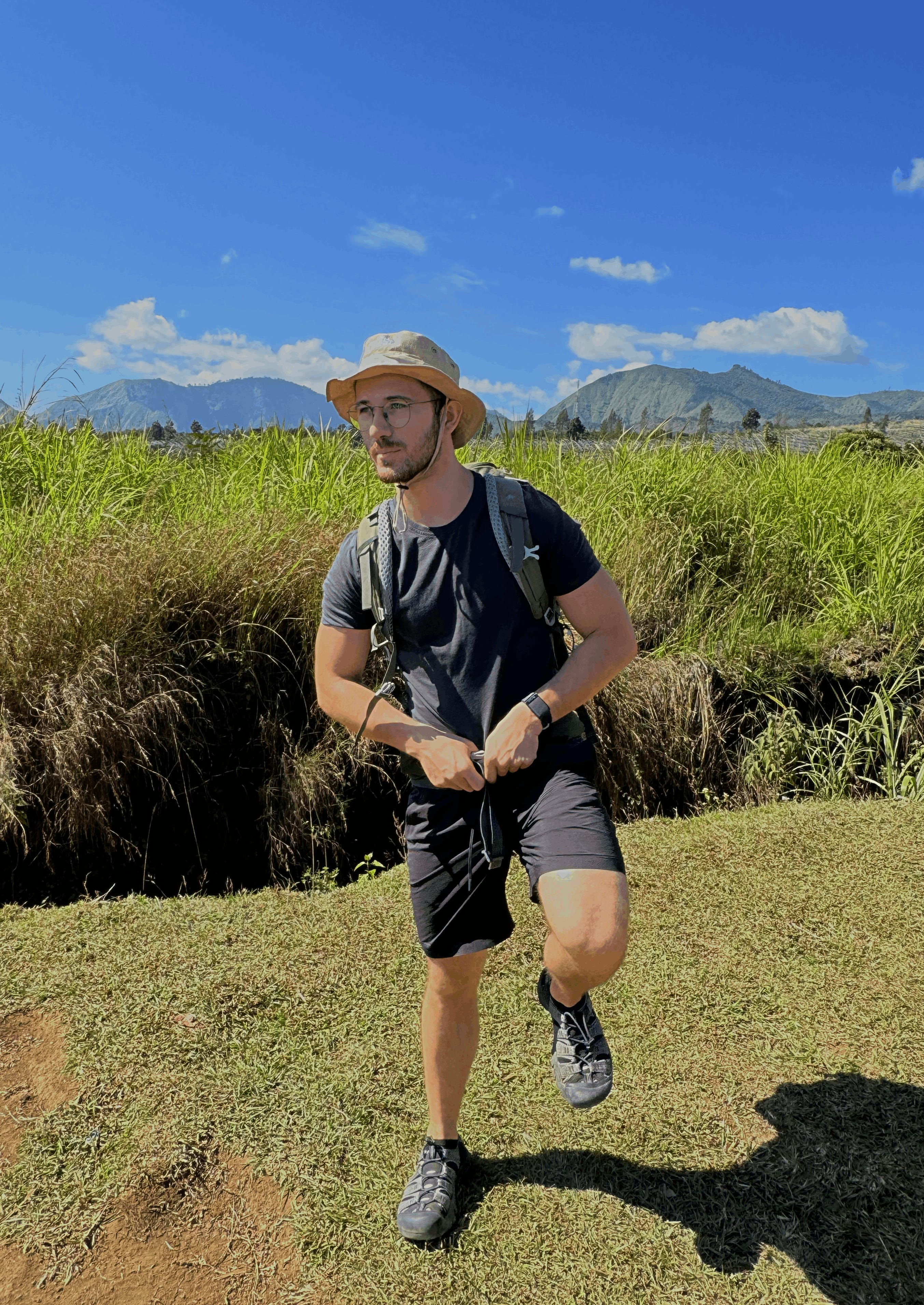
He had round glasses, green-blue eyes, and the kind of buzz cut that only works on people who have never had to negotiate with their hairline.
He usually dressed like someone who might leave a business meeting and immediately go climb a mountain: technical clothes, gym clothes, outdoor gear, and those horrifying Keen hiking sandals he loved with the sincere devotion only practical people can feel for ugly objects.
Nevertheless, he was a freelance marketer.
An alchemist of sorts, capable of turning clicks into gold through all the little tricks that make people buy things they later pretend were rational decisions.
He once showed me the Figma archive he used for inspiration, and I remember being genuinely blown away by it.
He had documented hundreds of landing pages, funnel structures, signup flows, email sequences, and page progressions from the biggest tech companies in the world, placing them side by side with terrifying precision, as if he were trying to reverse-engineer capitalism one screenshot at a time.
It looked less like a normal marketing swipe file and more like one of those conspiracy boards from crime movies, with pins, red string, and the quiet implication that someone had either discovered the truth or completely lost their mind.
Except in Dylan’s case, the conspiracy was just:
“Why do people click?”
Which sounds insane until you realize that, unfortunately, it worked.
He was annoyingly good at it.
By then, he had already orbited enough of my projects from the marketing side that he no longer felt like a random internet friend.
So when I was falling apart in Milan, he was one of the people I called.
I don’t remember exactly how the call started, but I remember telling him the story.
The collapse.
The company.
The friendship.
The money that had existed mostly on paper.
The life I thought I was building and had somehow been cropped out of.
He listened for a while and then said something like:
“Phil, I know what you actually need. We’re organizing a trip to Bali. Come with us for a month.”
Which, in retrospect, is exactly the kind of sentence that either saves your life or ruins it more creatively.
And because I had no better plan, no emotional stability, and apparently very little resistance to plot development, I said yes.
Part II
──✦ ──
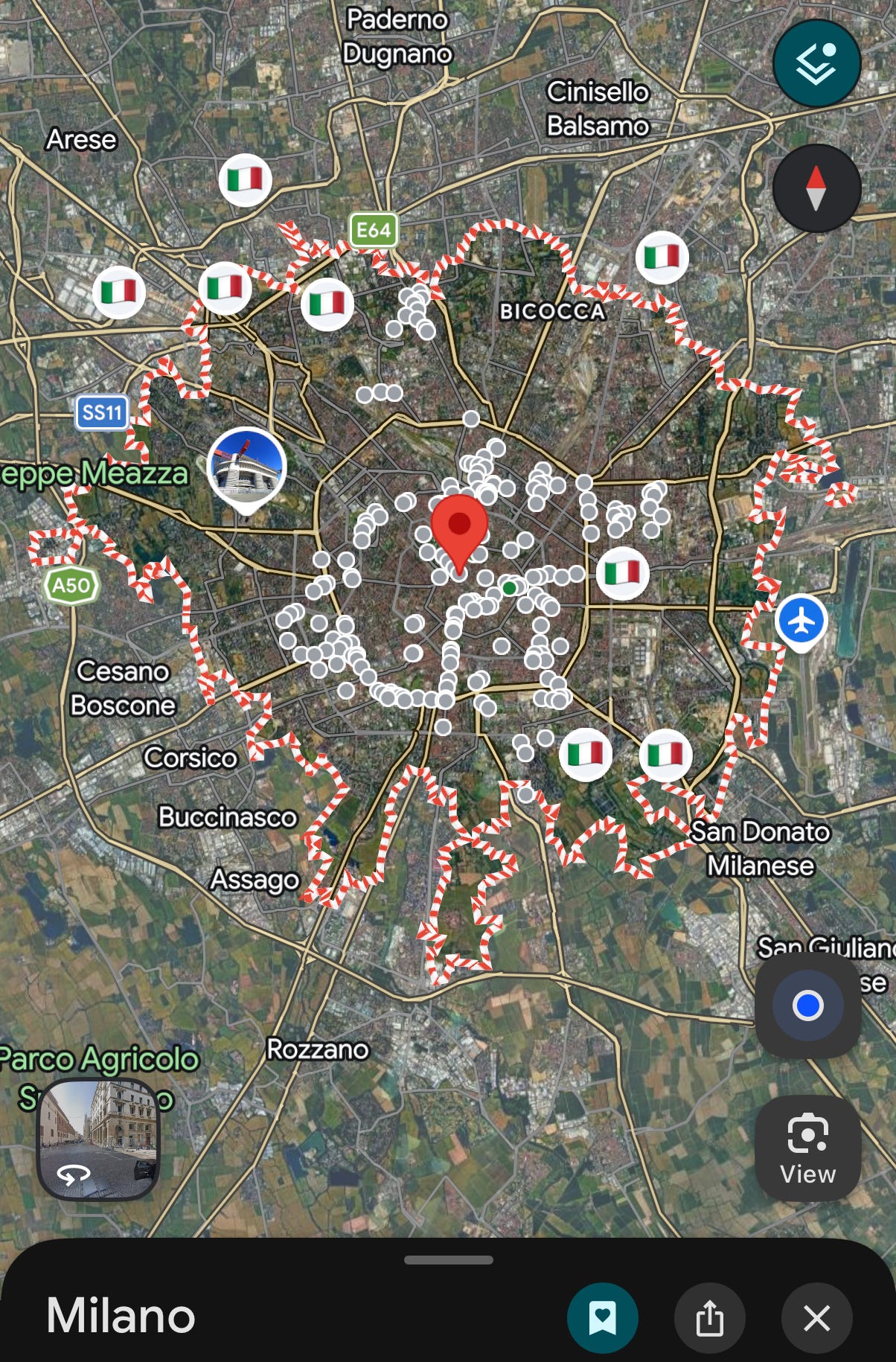
A map of open tabs
But Bali was in May.
Which meant I still had a month in Milan to survive before the escape route became real.
And Milan, at that point, had become impossible to survive.
Not because Milan is an especially tragic city.
It is mostly just expensive, grey, ambitious, and full of people confusing cortisol with purpose.
The problem was that I had lived too much of myself there.
Every neighborhood had become a small museum of something I had failed to finish, lost, abandoned, or outgrown.
Lambrate reminded me of the physics degree I never completed.
Yes, reader, my mother is still unhappy about that.
Vigentino reminded me of the worst networking event of my life.
The drinks were terrible, the average person was forty, and the most innovative startup in the room seemed to be importing Japanese snacks into Italy with the geopolitical seriousness of the Marshall Plan.
Then there was this young guy.
Tall and broad like a wardrobe, baby-faced, with nerdy glasses, an intense stare, and long hair that made him look like a hobbyist hacker from the sixties who had discovered LSD the week before.
When he spoke, his voice came out deep and almost intermittent, as if every sentence had to buffer before becoming real.
That was Giovanni.
Navigli and De Angeli reminded me of living with him.
Bande Nere reminded me of the time Giovanni and I decided to spar Muay Thai in the middle of a public roundabout, for reasons still unknown to both urban planning and common sense.
Duomo reminded me of our first office.
Technically, it was in Piazza San Sepolcro, where the manifesto of Italian Fascism was signed.
I am not implying anything about our startup culture.
I am simply reporting a funny coincidence to the authorities.
Romolo reminded me of our second office.
And of the weight I gained by eating at the nearby Old Wild West far too often.
Porta Romana and its hostels reminded me of my youth passing by.
Of being young, broke, overworked, and typing on my laptop late at night while people my age were outside being drunk, beautiful, stupid, dancing, flirting, smoking, becoming stories.
And there I was, replying to emails.
Giambellino reminded me that I did not have enough money to live somewhere better.
Which is a very humbling realization when, not long before, you had been calling yourself a paper millionaire.
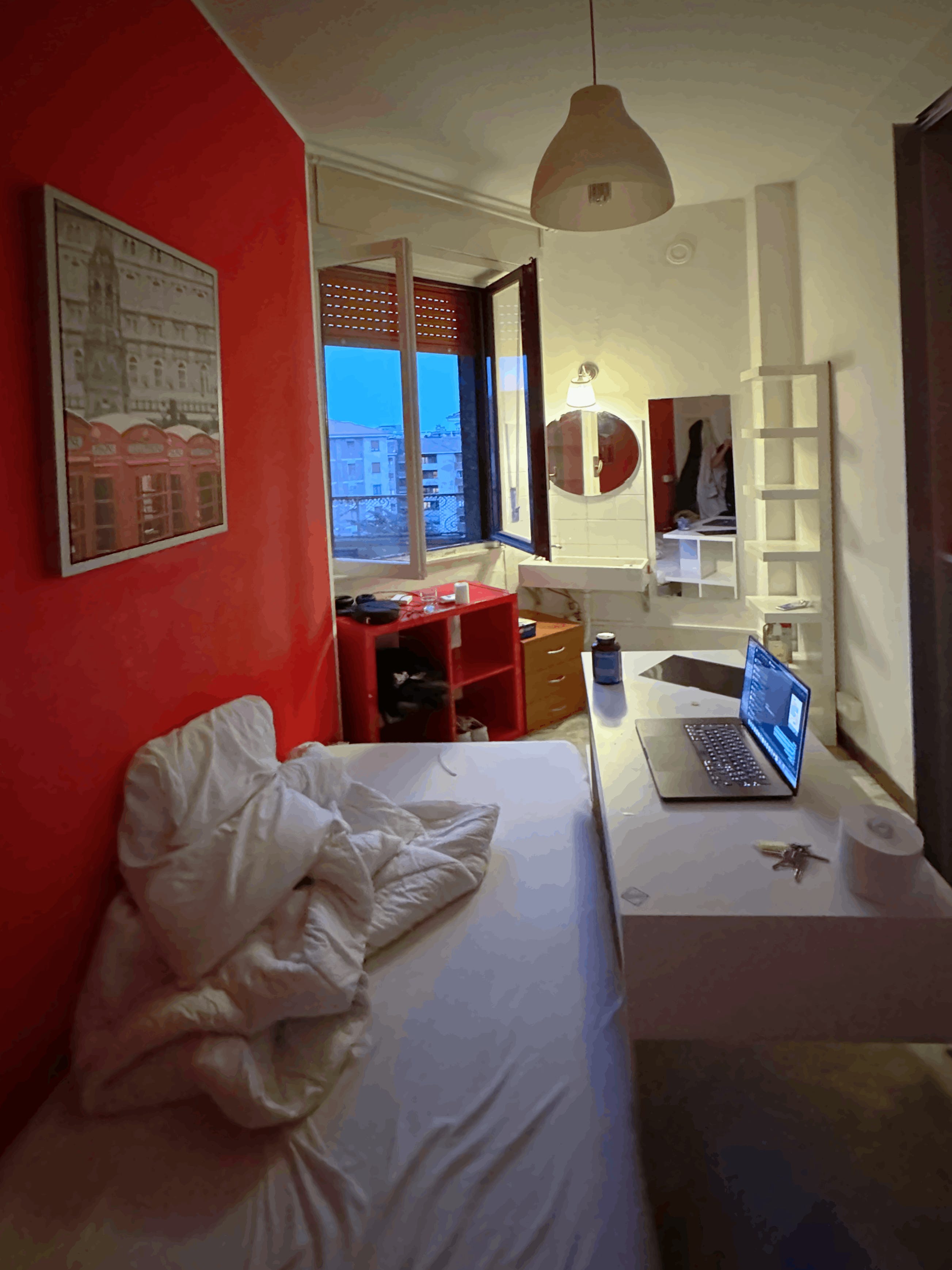
My apartment was five and a half square meters.
The bed alone took up half the room.
Mold on the ceiling.
At home, I used to work sitting on my bed, laptop on a tiny desk squeezed against the wardrobe.
There were eight roommates, each more annoying and chaotic than the last.
And next to my desk, there was a sink.
For a while, nobody explained it.
Then one day, a young art teacher who lived two rooms down told me the truth.
My room used to be a bathroom.
Man, people in Milan will do anything to squeeze more money out of an apartment.
They will look at a bathroom and see a business opportunity.
So I spent most of my days, and sometimes even my nights, in the office.
No shit.
The office was not comfortable either.
I slept on the floor, on two cushions that were not long enough to hold a human body.
One under my head.
One under my legs.
Nothing in the middle.
So every night my spine folded into a sad little V.
Still, it was better than going home.
At least until the cleaning lady came in at six in the morning, found me on the floor, and started screaming.
One time I had a date.
A successful one, somehow.
I invited her home.
She saw the room and left almost immediately.
The only thing she left behind was a blue bottle of Bombay gin.
I brought it to the office fridge.
For a while, before going back home, I used to take one sip of it in the office before returning to my architectural punishment.
My co-founders were not impressed.
“So what now?” they asked. “Gin, wank, and sleep?”
Porta Venezia made me question my heterosexuality with a consistency that felt almost administrative.
Via Lecco, which roughly translates from Italian as Licking Road, could not have been named anything else.
It was basically the closest thing Milan had to a gay Vatican.
My Swiss cousin liked hanging out there from time to time. She told me I could probably get free drinks and, for once in my life, experience what it felt like to be the one getting chased.
I don’t like guys.
But I do respect a favorable market dynamic.
And then there were CityLife and Isola.
The glass towers.
The aperitivos.
The startup people.
The founders who seemed to have kept what I had lost.
The offices, the investors, the equity, the confidence.
The LinkedIn posts written in that strange dialect where everyone is humbled, excited, and proud to announce the same sentence.
They had the story.
I had the footnote.
So no, Milan was not just a city anymore.
It was a map of open tabs in my nervous system.
Everywhere I went, the city handed me back an older version of myself.
And I had no idea how to become someone else while the whole place kept pointing at who I had been.
Part III
──✦ ──
Unemployed with clients
So I spent April doing the only sensible thing a recently exiled founder could do while waiting for Bali to become real.
Panic-selling his skills to anyone who might pay him.
I made an Excel sheet with completely made-up assumptions and called it a business case.
I was pitching it more or less like this:
Look.
If I send one email to every potential buyer in your market, and say, only 1% of them convert, and your average deal size is high enough, then you make an incredible ROI on my work.
If I can get you that kind of ROI, would you try it out?
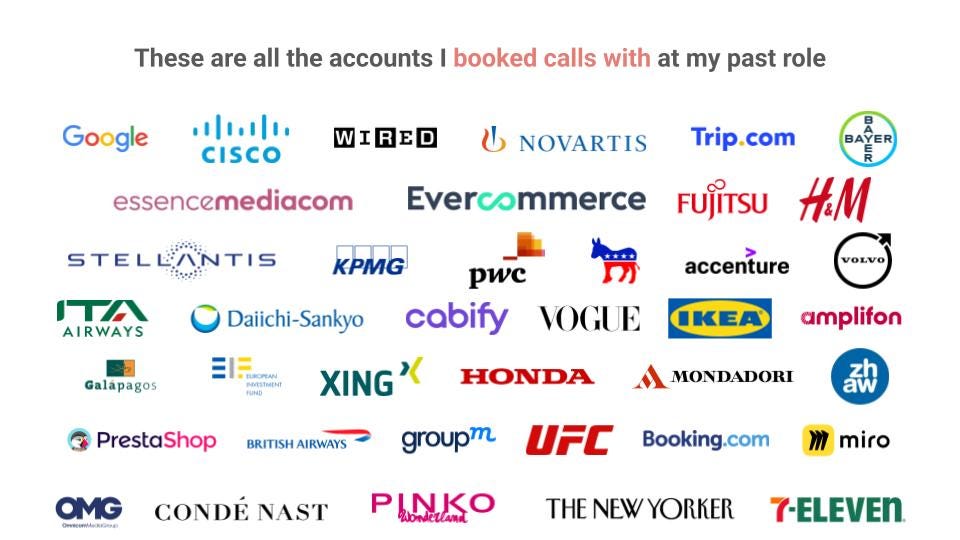
P.S. I am a founder too. I raised money too. I did this at Glaut and got meetings with billion-dollar companies.
At the time, this was apparently the closest thing I had to a personality.
It was not exactly McKinsey.
But it had numbers, confidence, and just enough truth in it to be dangerous.
I even had a slide deck, because nothing says “I am processing this in a healthy way” like turning your nervous breakdown into a sales presentation.
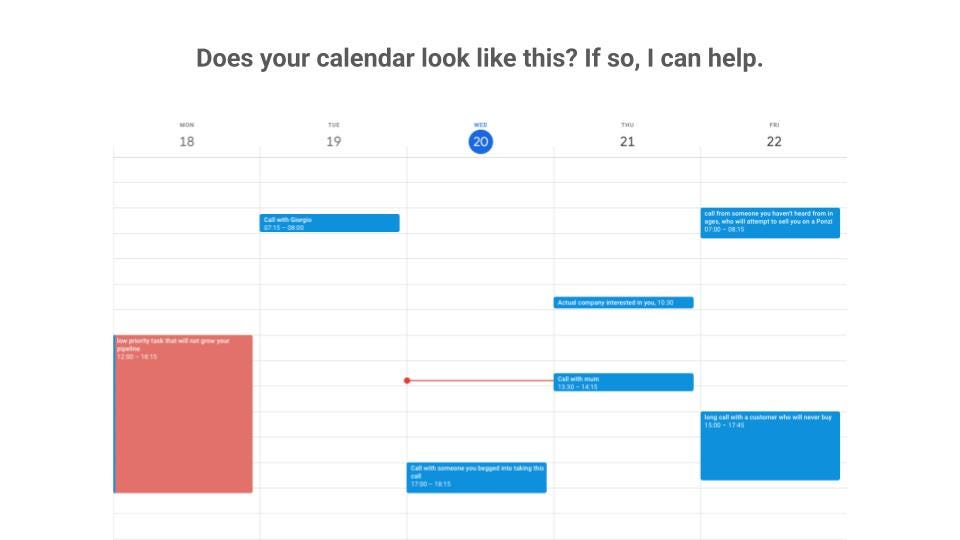
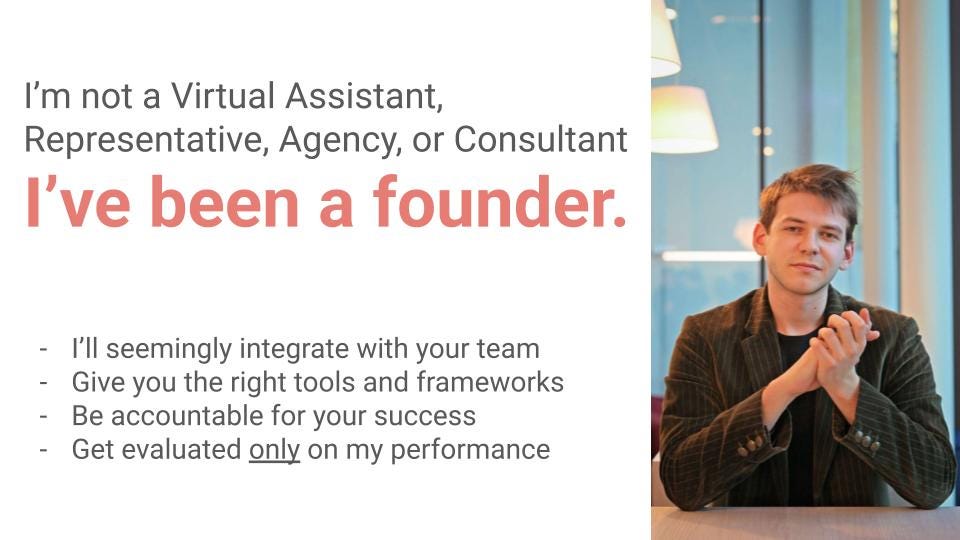
By the time I left, I had managed to get two clients.
I was technically a freelancer, although “unemployed with clients” would have been more accurate.
And of course, while I was trying to rebuild my life, the cold email world was quietly rebuilding itself too.
Google had changed things.
The old tricks stopped working.
The little hacks I had used at Glaut started breaking one by one.
Before, you could blast an irresponsible number of emails from a single inbox through SMTP servers like SendGrid and call it marketing.
Now suddenly you needed multiple domains, multiple inboxes, warmup, rotation, backup infrastructure, inbox placement tests, and all the other words that make normal people regret asking what you do for work.
That was the beginning of the multi-domain, multi-inbox era, later popularized by tools like Instantly.
Some people remember their twenties through love stories.
I remember mine through email deliverability updates.
But eventually, even cold email historians have to pack a suitcase.
By the time I finally boarded the plane, I had two clients, €10,000 in savings, zero structure, a dying playbook, and a ticket to Indonesia.
Which, somehow, was still the best plan I had.
I was not moving toward Bali as much as I was moving away from Milan.
At the time, I thought that was the same thing.
It wasn’t.