
The rat and the second mile
On dirty hands, the postal system, Jesus, & leaving one fewer stranger in the house

A few weeks ago, Barbara found a rat in our garden.
For most people, that would have been an unpleasant surprise.
For Barbara, it was the beginning of a week-long state of emergency.
By the end of the day, our house group chat had turned into a Pentagon war room: red alerts, satellite images, plans of intervention, and one small rat hiding somewhere in the bushes promoted to an advancing enemy force.
The orders were clear. Everyone was to do their part, clean the garden, and eliminate whatever conditions had allowed the rat to establish residency more efficiently than I had.
I understood the concern.
I also had no desire to enlist.
To understand why, you first need to understand how Barbara entered my life.
Last year, I rented a room in a small town in central Portugal for the implausible sum of €140 a month.
The house was originally supposed to exist mostly on paper. I needed a Portuguese address that would make me look sufficiently settled to the authorities, respectable enough to deserve tax exemptions now and, perhaps, a passport later, while I continued travelling around the world.
Unlike the rat, I never intended to live there.
Then I went to collect the keys, sign the contract, and see the place for the first time. Instead, I accidentally found somewhere I wanted to return to.
It became my quiet, extraordinarily cheap place to work, write, and disappear from the world for a while.
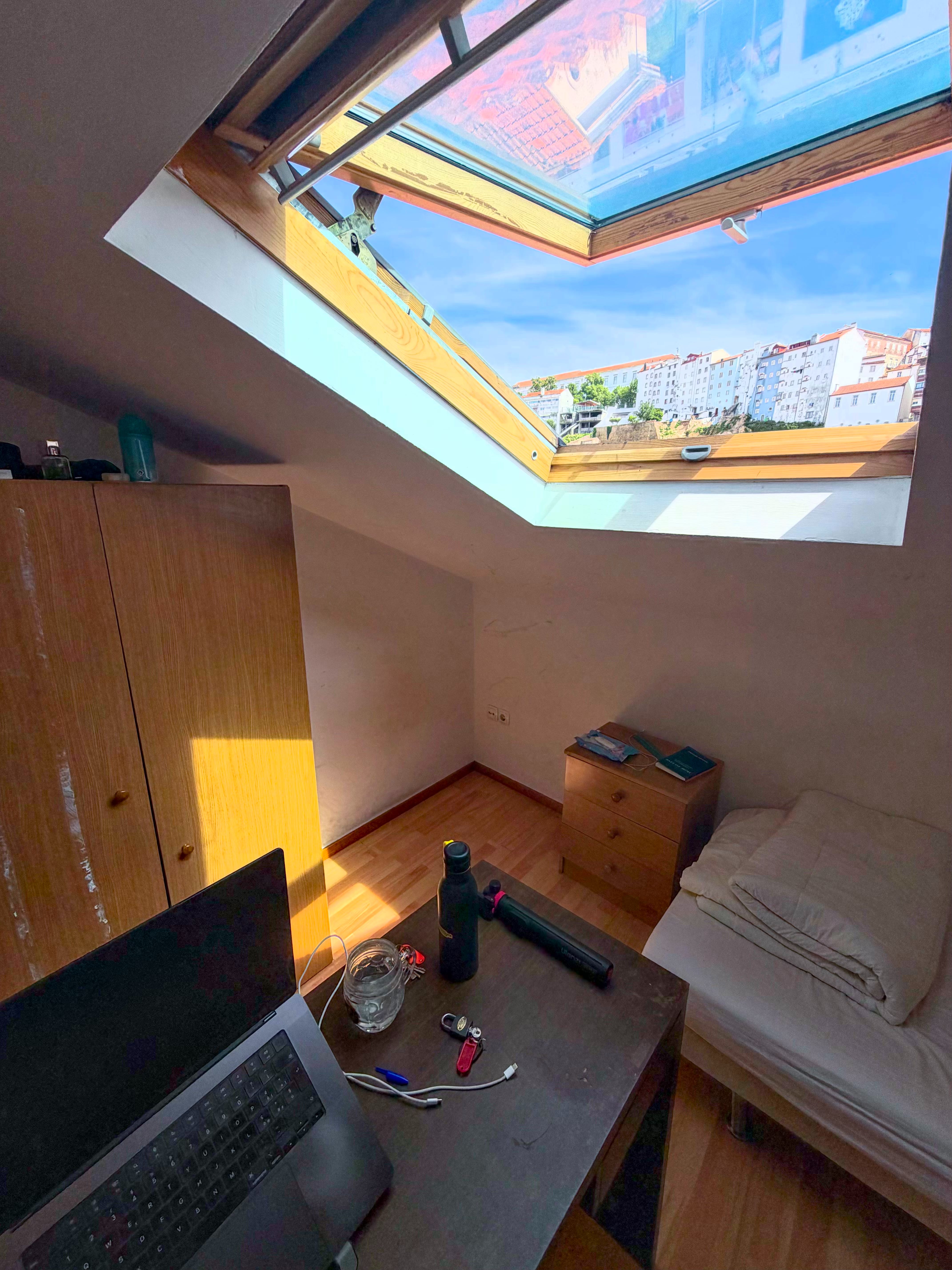
Cheap rooms, however, come with hidden costs.
Barbara was one of them.
Barbara is the kind of person who notices that you used the washing machine four times that week while she used it only three, calculates the theoretical difference in electricity consumption, and asks you to send a bank transfer to restore financial justice.
She is extraordinarily attentive to fractions when they favour her. In a kitchen shared by four people, for example, she occupies two of the three freezer drawers with no apparent sense that further calculation might be required.
When she cooks, she does not wash things once she has finished. She boils two litres of water and pours it into every pan, tray, bowl, plate, and glass she has touched, then abandons them across the kitchen for an hour or two.
The room becomes a domestic game of Minesweeper in which every mine is a container of boiling water, and the rest of us must cross it to reach the single freezer drawer she has left us.
What irritates me is not even the mess. It is the elaborate system she has invented to avoid cleaning it.
I also regularly find her waiting outside the house when I leave for the gym, perfectly still beside several bags of groceries.
I never know how long she has been there.
She greets me with the same smile and the same few words of broken English, then lowers her eyes towards the bags and waits for gravity and guilt to do the rest.
She never actually asks.
I carry them upstairs, she says a quiet obrigada, and the ritual is complete.
I understand that none of this makes me sound particularly charitable, but only God knows how much this woman annoys me.
So when she asked us to clean the garden, I had two obvious options.
The first was to follow the example of my friend Tayyab, ignore the group chat, keep cooking chicken biryani, and trust that Barbara and the rat would eventually settle the matter between themselves.
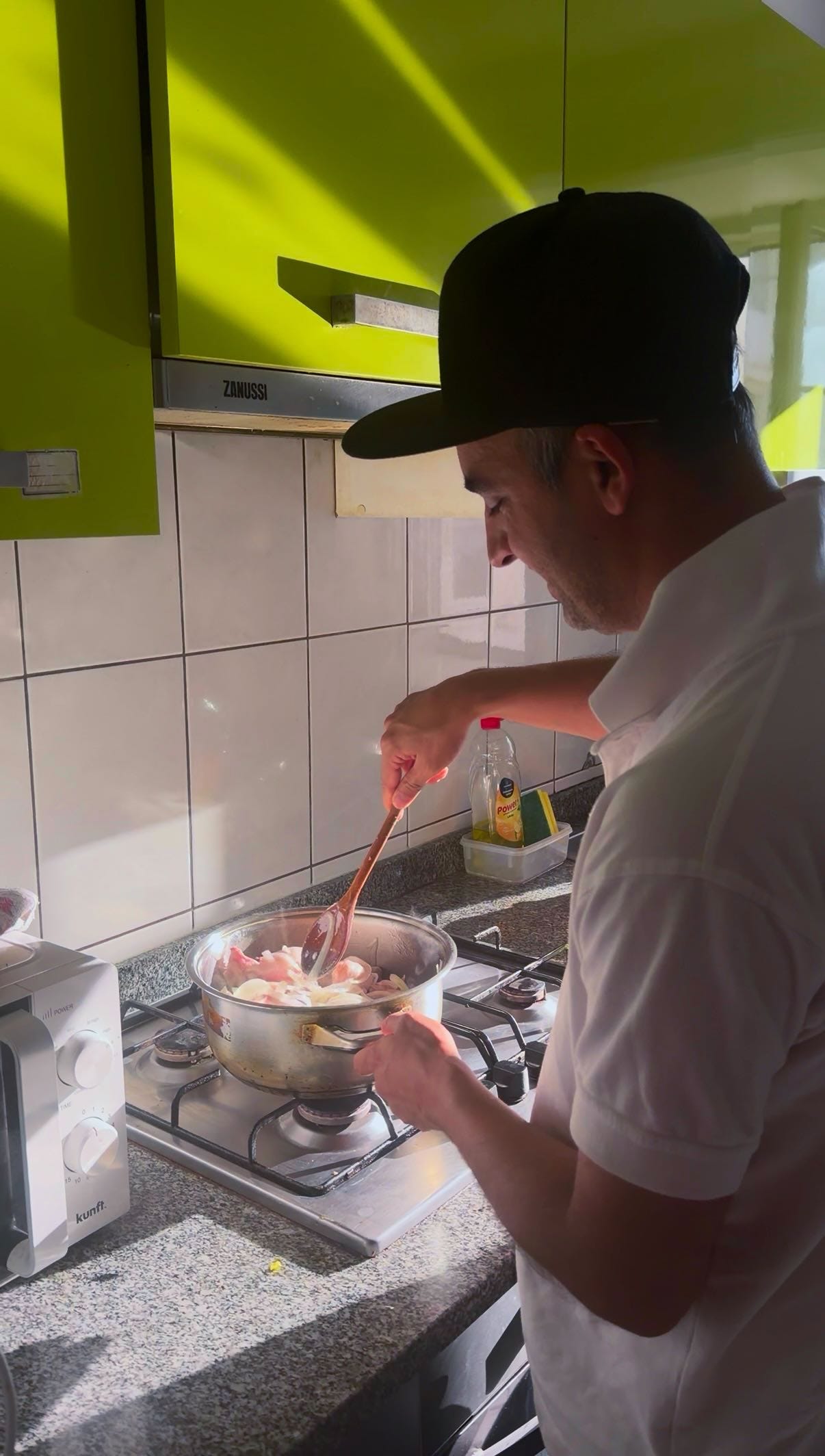
The second was to help.
Unfortunately for my desire to do absolutely nothing, I had recently been reading about Roman imperial logistics.
Rome moved soldiers, officials, and messages across an enormous territory partly by turning conquered people into temporary postal infrastructure. A soldier travelling through occupied land could stop a man on the road, place his equipment in his hands, and compel him to carry it for one Roman mile, roughly one thousand paces, regardless of where the man had been going or what he had planned for the rest of his day.
At the next milestone, the obligation ended. The man could put down the equipment and return to his own life.
What stayed with me was not the efficiency of the system, but the strange instruction Jesus gave to the people forced to live inside it.
As recorded in Matthew 5:41:
If anyone forces you to go one mile, go with them two miles.
Imagine reaching that milestone after carrying the equipment of the foreign army occupying your country. You have spent the entire journey counting your steps, waiting for the precise point at which the soldier’s authority ends and your life becomes yours again.
Then, instead of dropping the load, you continue walking.
The first mile belonged to Rome.
The second belonged to you.
The weight remained the same, but your relationship to it had changed. What began as an imposition had become a choice.
The timing of this revelation was inconvenient.
That weekend, I had relatively little to do and an increasingly strong desire to get my hands dirty.
Most of my work happens through a computer, where numbers move across dashboards, leads move through pipelines, and money moves between accounts. A great deal moves, but almost none of it has weight.
After years of working this way, I have developed a strange affection for activities that remind me I possess a body, especially the ones any competent capitalist would classify as having negative ROI: cutting wood, driving with nowhere urgent to be, moving furniture, fixing broken things, fighting, digging holes, or carrying something heavy simply for the pleasure of using my strength.
Perhaps I will feel differently when I am old and my lower back begins to hurt. For now, though, I am young, strong, and still mostly under warranty, so I might as well enjoy having a body while it lasts.
So I decided to clean the garden.
Not for Barbara, and certainly not because I agreed with her broader washing-machine-based economic philosophy, but because helping her could still be my choice.
The grass would not become shorter because my motives were purer, and the tools would not become lighter because I had chosen them. The work would be just as unpleasant. What changed was that I no longer felt forced into it.
So I might as well pick up a sickle and spend an hour looking like a communist propaganda poster.
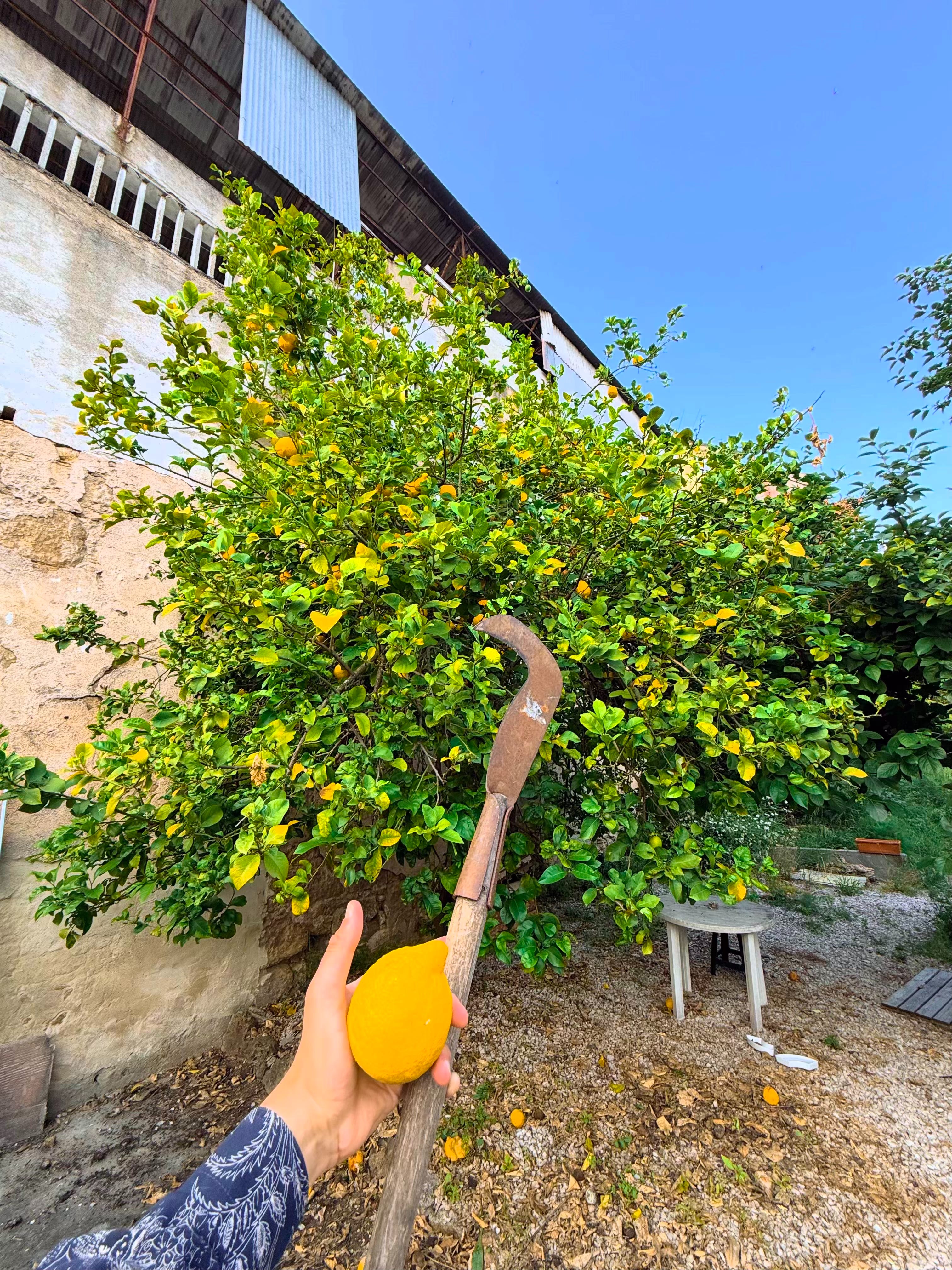
The plan was for everyone to meet in the garden at ten in the morning. I arrived five minutes early, as my years in Milan had trained me to do.
Milan teaches you that when a group agrees on a time, you arrive five minutes early. Arriving exactly on time is already a minor failure; arriving three minutes late is a biblical sin. If the meeting is online, the other person’s third minute of absence releases you from all moral obligation to remain on the call.
Milan also teaches you that lunch is an administrative procedure that should take no longer than forty-five minutes, and that any period of inactivity exceeding fifteen should probably be monetised.
At ten, nobody was there.
Ten minutes later, still nobody.
The garden waited in complete silence, overgrown and apparently unconcerned by our scheduling problems.
I was annoyed. I had made the mature decision to help people I did not particularly like, and the least the universe could have done was provide witnesses.
Their absence also gave me the perfect excuse to leave. I had arrived when we agreed; they had not. By any reasonable standard, I had completed my first mile.
Leaving would also have given me one of the greatest pleasures available to the human ego: being technically right.
Instead, I picked up the sickle and broom and started working.
This irritated me even more, because it deprived me of the opportunity to resent everyone properly.
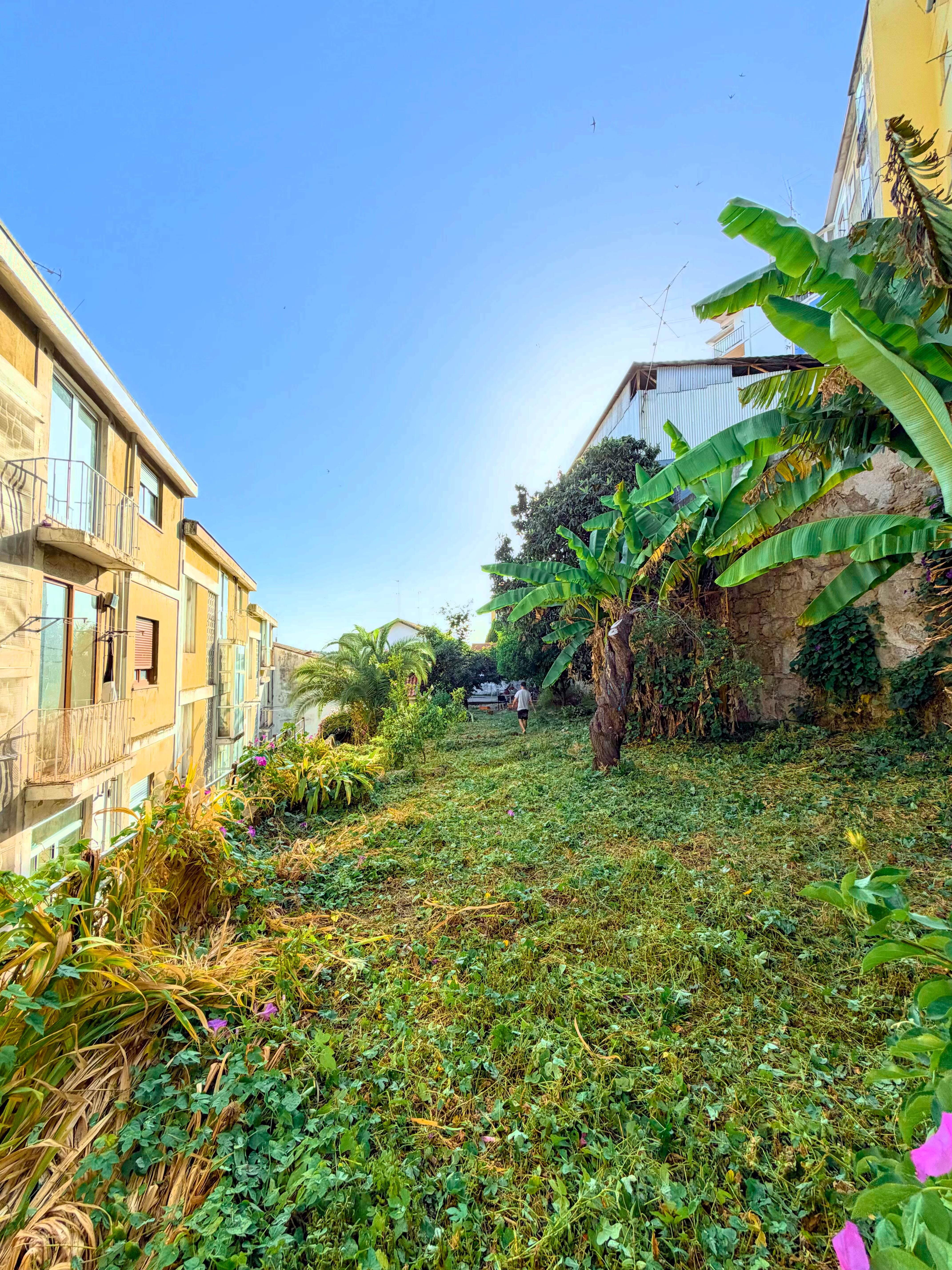
The garden was in worse condition than I had realised. Tall grass had swallowed objects whose original purpose had been lost to history, branches had collapsed into one another, leaves had gathered in every corner, and several small ecosystems appeared to be developing without planning permission.
I cut the grass, pulled weeds from the ground, swept away leaves, and moved abandoned objects from one side of the garden to the other, sometimes without producing any obvious improvement but always with the confidence of a man engaged in manual labour.
There is something satisfying about work whose progress can be seen without opening an analytics dashboard. You cut something and it becomes shorter. You move something and it is suddenly somewhere else. You sweep the ground and, beneath the leaves, the ground reappears.
No attribution model required.
After about forty-five minutes, Pedro arrived.
Pedro had been living in the same house as me for about six months, although most of what I knew about him came through the kitchen.
He cooked some of the worst-smelling substances ever produced legally inside the European Union, then forgot to close the door and allowed them to travel down the corridor into my bedroom like an occupying force.
Once, he left fruit outside the refrigerator for so long that a civilisation of fruit flies formed around it, complete with territory, supply routes, and what appeared to be a rudimentary political system.
That was when I abandoned the upstairs kitchen and began camouflaging myself as a resident of the floor below.
Pedro and I therefore knew each other mostly through evidence. He knew me as the person who complained about the kitchen. I knew him as the source of several unexplained smells.
Now we were standing beside each other in the garden, holding tools.
For the first ten minutes, we worked in silence. The atmosphere was not openly hostile, but it had the awkwardness you would expect between two people who had shared an address for half a year without ever having a conversation that did not involve a minor domestic violation.
We could have finished the garden like that and returned to our separate lives.
Instead, I eventually turned to him.
“Pedro, we’ve known each other for six months and I know absolutely nothing about you. Tell me something.”
He looked surprised, then began to answer.
Over the following hour, he told me the ordinary things people tell you when you finally allow them to exist beyond the role you assigned them. Where he had lived, what he was doing, what he wanted, and the small collection of stories and opinions that turns a person from background scenery into someone specific.
Nothing extraordinary happened.
That was precisely the point.
We continued cutting branches, pulling weeds, and carrying piles of dead plants across the garden, but the work became lighter. I was no longer standing beside the human embodiment of an unclosed kitchen door. I was working with Pedro.
At some point, we took a photo together. We were dirty, holding garden tools, and smiling with the undeserved confidence of two men who had briefly defeated nature.
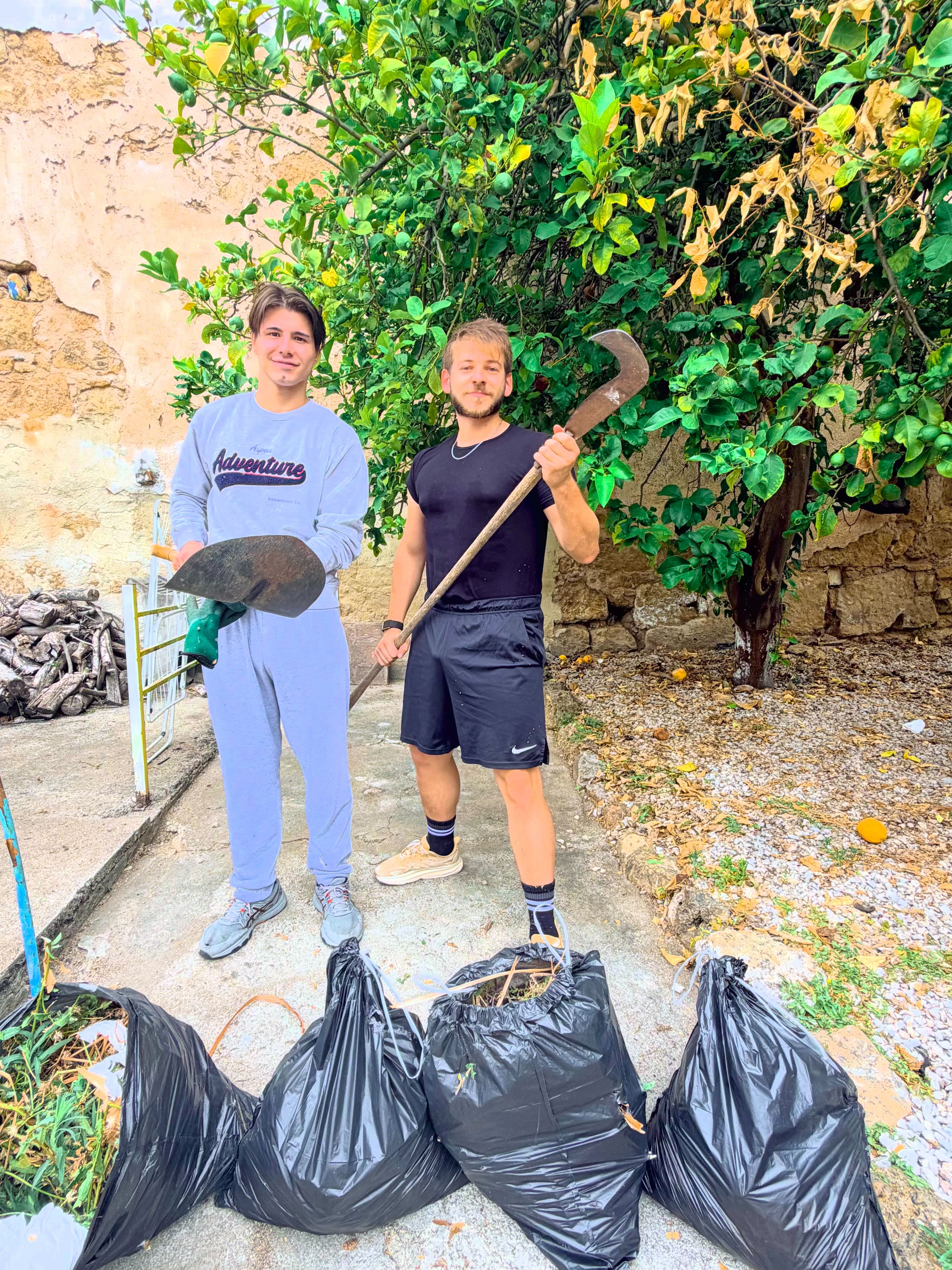
We made a surprisingly good team, and no task seemed beneath us.
I thought of another scene from the life of Jesus, the one in which the teacher kneels to wash his disciples’ feet. The highest person in the room chooses the lowest task.
I had spent years treating leadership as the right to escape unpleasant work. That morning, it looked more like the freedom to do it without feeling diminished.
By the end of the morning, the garden looked almost respectable. The weeds had been cut, the rubbish removed, and the ground had reappeared beneath the leaves.
We never found the rat.
Perhaps it escaped. Perhaps it remained hidden in the bushes, satisfied that its brief appearance had finally persuaded the household to take collective action.
Barbara remained Barbara. The washing-machine accounting system was not abolished.
Tayyab never joined us. I assume the biryani survived the emergency.
Pedro remained perfectly capable of leaving the kitchen door open again, and I remained perfectly capable of complaining about it. Landscaping had redeemed no one.
But the man across the hall was no longer just a dirty kitchen and a collection of smells. He had a voice, a history, and a face that now meant something to me beyond irritation.
I left the sickle against the wall, washed the dirt from my hands, and went back inside with one fewer stranger in the house.